
Airbnb Backed Down on Its House Rules
Airbnb softened its new house rules after host pushback, but the checkout-chore limits took effect Nov 20. What changed, what didn't, and what hosts should do now.
By VeriPhEye
For years, a host's checkout list sat on the fridge: run the dishwasher, strip the beds, take the trash to the curb. Guests mostly did it. The cleaner arrived to a head start, and the turnover fit inside the four hours between checkout and the next check-in.
Then Airbnb said guests no longer have to. When the change was announced, one longtime host told TechCrunch that "guests are given complete freedom to be lazy while the hosts bear the risk", and threatened to leave the platform after twelve years. Thousands of hosts agreed. A month later, Airbnb blinked. Just not on the part that lands on your cleaners.
What Airbnb changed, and why
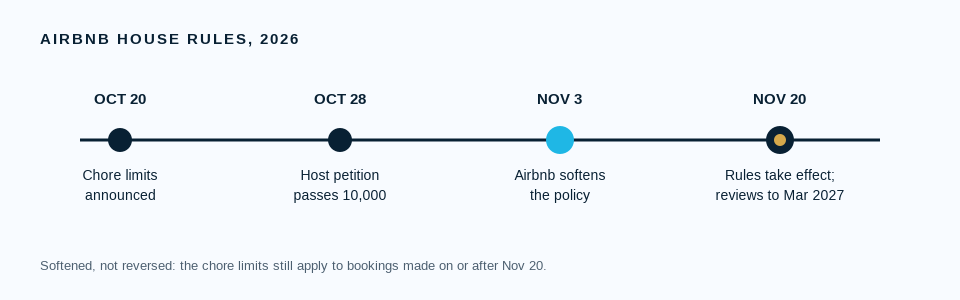
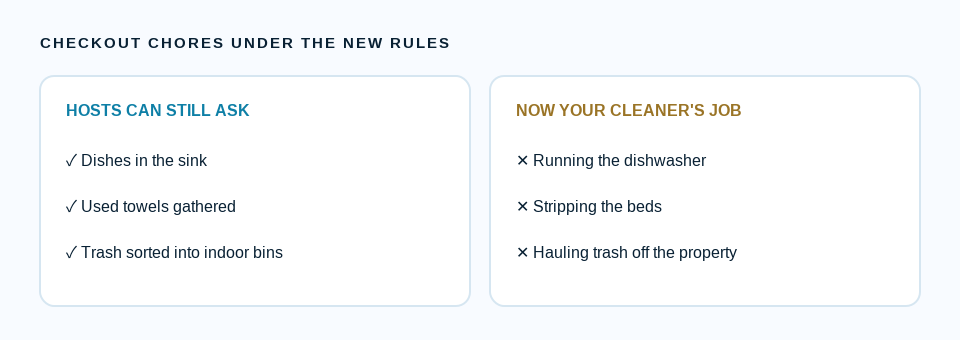
On October 20, Airbnb announced a new house-rules policy, effective November 20, 2026. Its reason was blunt: "Guests have told us for years that checkout chores and unexpected rules make them hesitant to book on Airbnb." Hosts can no longer require tasks that take "significant effort or time, or would typically be performed by a cleaner." That means no required dishwashing, no bed stripping and no hauling trash off the property. Hosts can still ask guests to put dishes in the sink, gather used towels and sort trash into the indoor bins.
Hosts pushed back hard. Within a week, a petition had more than 10,000 signatures, and some hosts planned a booking blackout for November 20. By early November, it had passed 27,000.
What Airbnb softened on November 3
On November 3, Airbnb updated the policy and admitted, "We also could have done a better job explaining why and how we're making these changes." As Skift reported, the concessions were real:
- Guests are now expected to follow a listing's house rules. Before, they were only "encouraged" to.
- "Requests" became "Additional rules", with more weight behind them.
- Hosts can require a signed agreement where it's needed for legal or insurance reasons, HOA rules, monthly stays, Luxe listings and optional amenities.
What didn't change
Here's the part the headlines skipped. The chore limits stayed. Hosts still can't charge guests fines, though local or HOA fines can be disclosed. They can't add rules after a guest books. They can't collect guest IDs or contact details unless a law, building or insurer requires it. And all of it applies to reservations booked on or after November 20, worldwide.
So Airbnb changed the wording, not the work. The dishes still get washed. The beds still get stripped. The trash still goes out. The only question is who does it, and the answer is now your cleaner.

What this means for hosts
Your turnovers just got longer. Every task guests used to do now sits inside the same checkout-to-check-in window. Hosts and cleaning companies will have to price it, as some industry voices have argued all along. Dennis Goedheid of Casiola called the change "overdue", saying guests "pay a cleaning fee and then get a list of chores." Expect cleaning fees and cleaner rates to move.

Rushed turnovers are where things get missed. The fourth bedroom, the second bathroom, the dishwasher that was loaded but never run. When guests are told they don't have to help, the property's condition at check-in depends entirely on the cleaning and on knowing it actually happened.
Disputes shift too. If a guest leaves a mess they were allowed to leave, it's no longer a rule violation. It's just part of the turnover. That makes evidence of what the cleaner found, and what they finished, more valuable, not less.
Why proof of the turnover matters more now
Airbnb's change is a bet that guests will book more when checkout feels effortless. That only works if the next guest walks into a home that is truly ready. The host's promise hasn't changed. The work behind it just moved entirely onto the cleaning team.
That's the problem VeriPhEye was built for. A cleaner records a short, guided phone walkthrough on each turnover. Vision AI inspects each room against the host's standard, and a time-stamped report shows the evidence room by room, so the host can see the property is ready before check-in. When guests do none of the chores, that report is how a remote host knows the dishes, the beds and the trash were all handled.
What to do this week
- Watch for review flags. Airbnb is reviewing listings from November 20 through March 2027. You'll get an email and an in-app notice, and at least 20 days to fix a rule or appeal.
- Appeal with documents, once. If a rule comes from an ordinance, an HOA or your insurer, attach it to the appeal. Appeals can be submitted only once.
- Move every rule into the listing. Rules in messages, guidebooks or door signs belong in the House rules section. Check that your PMS sync doesn't overwrite your fixes.
- Rewrite the checkout list. Keep what's still allowed (dishes in the sink, towels gathered, trash sorted inside) and drop the rest.
- Re-price the turnover. Talk to your cleaners about the extra work, and decide whether your cleaning fee needs to change.
- Make the turnover checkable. Know the home is ready before the next guest arrives, without relying on the last guest's effort.
The checkout list on the fridge is shorter now. The work isn't. It just moved to the person who arrives after the guest leaves.
References
- TechCrunch, on hosts' backlash to Airbnb's chore limits (2026-10-21). techcrunch.com
- Airbnb Resource Center, important changes to house rules (published 2026-10-20, updated 2026-11-03). airbnb.com
- Fortune, on the host petition and planned booking blackout (2026-10-28). fortune.com
- The Conversation, what the changes mean for travellers and hosts (2026-11-09). theconversation.com
- Skift, "Airbnb Makes Concessions on House Rules After Host Pushback" (2026-11-16). skift.com
- Rental Scale-Up, guide to Airbnb's new house rules policy (updated 2026-11-11). rentalscaleup.com
- Global News, on the policy taking effect (updated 2026-11-22). globalnews.ca
See it on your turnovers