
Scammers Already Know Your Guest's Name and Dates. The Rental Industry Isn't Ready.
Five property systems breached in six weeks, guests phished with their real booking details, and AI making it worse. What STR hosts need to know and do now.
By VeriPhEye
 REC2026-11-25 · ROOM-BY-ROOM
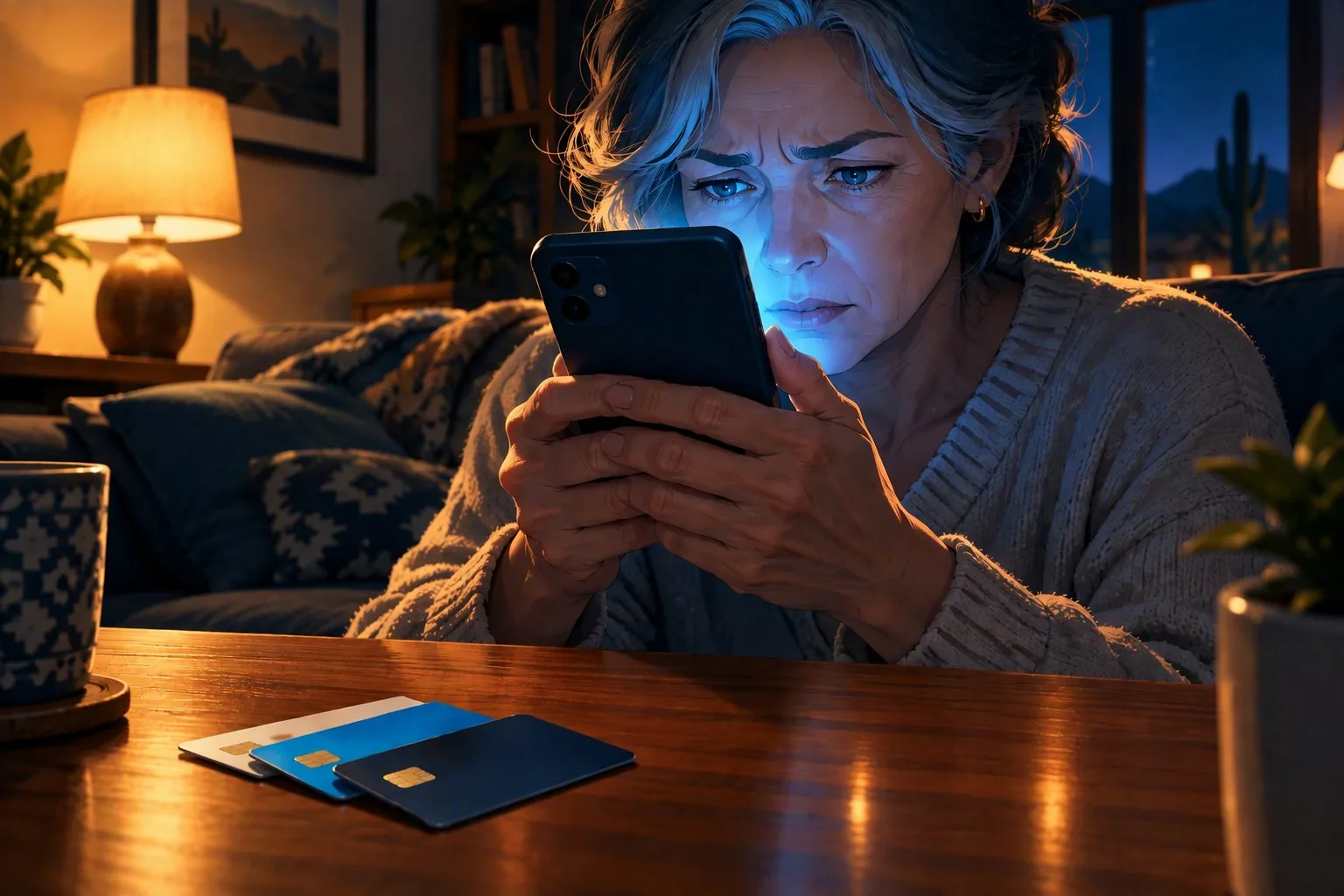
The message arrived on a Thursday evening, three weeks before her trip. It came on WhatsApp, from what looked like the manager of the lake cottage she had booked for her granddaughter's birthday. It had her name, her check-in date and her booking number. Her payment hadn't gone through, it said, and the reservation would be released at midnight unless she confirmed her card.
She clicked the link. The page looked exactly like the booking site she'd used. She typed in her card. Error, please try another card. She tried her second card, then the third, the one she kept for emergencies.
The next morning her bank called about charges she hadn't made. By lunch she had cancelled all three cards. Imagine how much hassle she will have to go through and how frustrated she must be.
Every part of her evening has happened to real travelers. A woman in her 70s named Ann, in a case shared by a fraud investigator, lost about $8,000 to a near-clone of a real cruise line's site. This week, guests of Auckland's holiday parks got messages quoting their real names, dates and confirmation numbers after their booking provider was breached. And researchers just found fake rental sites with live "support" chats that reassure hesitant visitors the card request is only a security check.
So how did they know?
How do scammers know my guest's booking details?
Because the industry's own systems have been leaking them. In October, the hospitality software company Aeve published a list titled "5 PMSs Breached in the Last 6 Weeks." A property management system (PMS) holds a rental business's reservations, guest contacts and calendars.
- Temairazu (Japan): data on up to about 4.45 million people may have leaked, including guest names and emails.
- Medialog (France): attackers took about 135 GB of complete guest records from roughly 1,500 hotels, including names, birth details, nationalities and stay history.
- Misterbooking (France): an intrusion detected on October 19 extracted guest identities, bookings and attached documents.
- RMS (Australia): guest and booking data was stolen from a platform used by more than 6,000 properties, and the scam emails that followed quoted real booking numbers and dates.
- iGMS: told customers on October 30 about unauthorized access to reservation information, according to Aeve. We couldn't find iGMS's own notice.
Then it reached OwnerRez. Its CEO, Paul Waldschmidt, explained why guests were getting WhatsApp messages that seemed to come from their host or cleaner, quoting real bookings and asking them to "verify" a card. "Nobody broke into OwnerRez," he wrote. Instead, someone chained together guest-facing pages that needed no login: booking sites led to calendar (iCal) feeds, the feeds led to rental agreement pages, and those pages showed guests' names, phones, emails and dates. "The problem was how the steps connected together." About 4 in 10 OwnerRez accounts had at least one affected booking, and the company closed the route within about five hours.
A ransomware group also claimed in April to have stolen Guesty data. Guesty hasn't publicly confirmed it.
The scam doesn't need a break-in
The thief doesn't need your guest's card. They need your guest's trust, and real booking details buy it. Sometimes those details come from a breach, sometimes from pages that were never meant to be a door, and sometimes from the staff who run the property. Microsoft documented a campaign that impersonated Booking.com to phish hospitality staff with fake guest complaints and install malware that steals logins. Sekoia traced what happens next in a campaign it named "I Paid Twice": attackers read real reservations, then message guests on WhatsApp and send them to a fake payment page. Stolen Booking.com logins sell for $5 to $5,000.
The rule guests need to hear is simple. Booking.com will "never ask you to share credit card details by email, over the phone, through text or WhatsApp," and Airbnb says payments must stay on the platform. The scam works because, in the moment, the message doesn't feel like a stranger. It feels like you.
Security is paramount in the age of AI, and the STR industry is unprepared for it
Security is paramount in the age of AI, and the STR industry is unprepared to deal with the level of AI hacking technology that is coming for it.
The old tell of a scam was bad writing. AI erased it. Booking.com's security chief, Marnie Wilking, said she had seen phishing attacks rise by 500% to 900% in 18 months, starting shortly after ChatGPT launched. Microsoft found AI-automated phishing emails were clicked 54% of the time, versus 12% for ordinary ones. The FBI counted $20.87 billion in reported cybercrime losses in 2025, and people aged 60 and over, the guest in our story, lost $7.75 billion, up 59%. For breached hospitality businesses, IBM puts the average cost at about $4.03 million.
Short-term rental is especially exposed. A small team runs a stack of connected tools (channel manager, PMS, smart locks, guidebook, cleaning app, payments), and every connection is another login to phish or link that says too much. Owners, cleaners and co-hosts share access from personal phones. Guests expect to hear from their host on WhatsApp. And most operators have no security team at all. The attackers have AI that writes perfect messages. Many rental businesses are still defending with a shared password and good intentions.
VeriPhEye is ready to tackle this problem and get ahead of it
VeriPhEye is one of the few companies ready to tackle this problem and get ahead of it. VeriPhEye has around-the-clock security that is AI-enhanced, and is working to make sure everything is audited and customer data is secured and prepared for the AI era.
That matters because of what we build. VeriPhEye turns a cleaner's guided phone walkthrough into a dated, evidence-backed record of the home, owned by the operator and readable by AI agents through an API or MCP. A record like that is only valuable if it's trustworthy, and only trustworthy if it's protected. So we treat security as part of the product, not an afterthought. The scams of 2026 work because guests can't check that a message is real. The answer is the one that protects a turnover: proof you can check, not claims you take on faith.
What to do this week
- Tell every guest the rule. Add to your confirmation: "We will never ask for your card by WhatsApp, text or email. If anyone does, it isn't us."
- Audit your guest-facing links. Open your booking site, iCal feeds, guidebooks and pre-arrival forms in a private window. If you can see a guest's details without logging in, so can a stranger.
- Turn on two-factor login for your PMS, channel manager, Airbnb, Vrbo, Booking.com and email.
- Train your team to treat "guest complaint" or "negative review" emails with links or files as suspect.
- Ask your vendors who can see guest data, whether access is audited, and how fast they report incidents.
- If a guest entered card details, tell them to call their bank to block the card, and report it to your PMS vendor and the platform.
The woman in our story did everything right. She booked a real place on a real site. What failed her was everything behind it. Rentals run on trust between strangers, and in the age of AI that trust has to be protected as carefully as the front door.
See it on your turnovers